“From the outside it appears to be in shambles because he was never sufficiently committed to the success of his own plan and, as a result, Republicans were able to mobilize to turn the issue against him and he provided the Congressional Democrats no leadership.”I'm guessing it's in shambles because Obama faced the reality that closing Guantanamo is a bad idea.
Showing posts with label detainees. Show all posts
Showing posts with label detainees. Show all posts
Why is Obama's plan to close Guantanamo "in shambles"?
David Remes, lawyer for 14 detainees, says:

New Wikileakage — "a secret chronicle of the United States’ relations with the world in an age of war and terrorism."
The NYT passes along the "brutally candid views of foreign leaders and frank assessments of nuclear and terrorist threats."
¶ Gaming out an eventual collapse of North Korea: American and South Korean officials have discussed the prospects for a unified Korea, should the North’s economic troubles and political transition lead the state to implode. The South Koreans even considered commercial inducements to China, according to the American ambassador to Seoul. She told Washington in February that South Korean officials believe that the right business deals would “help salve” China’s “concerns about living with a reunified Korea” that is in a “benign alliance” with the United States.Much more at the link.
¶ Bargaining to empty the Guantánamo Bay prison: When American diplomats pressed other countries to resettle detainees, they became reluctant players in a State Department version of “Let’s Make a Deal.” Slovenia was told to take a prisoner if it wanted to meet with President Obama, while the island nation of Kiribati was offered incentives worth millions of dollars to take in a group of detainees, cables from diplomats recounted. The Americans, meanwhile, suggested that accepting more prisoners would be “a low-cost way for Belgium to attain prominence in Europe.”
"Ahmed Ghailani's trial shows that courts should admit all reliable evidence."
Writes lawprof Akhil Reed Amar:
For more than a century after the Declaration of Independence, no court in America excluded evidence in a case like Ghailani's. Indeed, the very point of a public trial was to enable the members of the public to bring forth their evidence and have it heard by the jury and the gallery: "That's the man! And here's my proof." In 1783, an English court famously confronted a situation in which a suspect had in effect been coerced into leading the government to find a cache of stolen goods. The idea that evidence about the cache should be suppressed at trial was dismissed by the court as "novel in theory," "dangerous in practice," and "repugnant to the general principles of criminal law." A later court tartly summarized the traditional Anglo-American rule about procuring evidence: "It matters not how you get it; if you steal it, even, it would be admissible in evidence." In 1822, early America's most learned jurist, Supreme Court Justice Joseph Story, wrote emphatically: "In the ordinary administration of municipal law the right of using evidence does not depend … upon the lawfulness or unlawfulness of the mode, by which it is obtained. … The evidence is admissible on charges for the highest crimes, even though it may have been obtained by a trespass upon the person, or by any other forcible and illegal means."Amar isn't saying Judge Kaplan misunderstood the existing case law on the subject. He wants the Supreme Court to change it:
The Founders' Fifth Amendment did operate as a rule of exclusion: It excluded the government from introducing the defendant's own involuntary testimony. But it did so precisely because such testimony was viewed as unreliable.
[T]he high court could categorically hold that even if physical evidence must sometimes be suppressed, live witnesses, who, after all, speak based on their own free will, should never be muzzled....ADDED: A key fact: The government chose not appeal Judge Kaplan's decision to suppress the evidence.
In addition, the Court could expand an important limitation on the exclusionary rule known as "inevitable discovery." This standard allows the government to use evidence that would have eventually surfaced regardless of any coerced confession or improper search. Courts thus should strongly—perhaps irrefutably—presume that a witness's conscience would have impelled him to come forward on his own.
"The Washington Post today reported that the Obama administration has given up on any hope of prosecuting Khalid Sheihk Mohammed in Lower Manhattan."
"Moreover, there is apparently little appetite in the administration to revive plans to try KSM via military commission, and they may simply allow Mohammed to remain incarcerated at Guantanamo Bay indefinitely, without trial."
After all the bold talk in the campaign, Obama apparently has no idea what to do with the detainees. Or, that he had ideas, but they encountered reality. Why not reach out to newly reddened America by saying Bush actually got it right and proceed with the military commissions?
After all the bold talk in the campaign, Obama apparently has no idea what to do with the detainees. Or, that he had ideas, but they encountered reality. Why not reach out to newly reddened America by saying Bush actually got it right and proceed with the military commissions?
Bush says "damn right" he approved of the waterboarding of 3 detainees and he'd do it again — and the American people approve.
Overwhelmingly. Mostly silently. To the distress of the small sliver of the population that includes Dahlia Lithwick.
According to Bush, Abu Zabeta wanted all "the brothers" to be waterboarded until they broke so they, like him, would get "the chance to be able to fulfill their duty."
I think this is the most interesting thing George Bush said in the interview with Matt Lauer that aired on NBC last night. The topic was waterboarding, which Bush said he believed was legal "because the lawyer said it was legal." The technique was used to get information from Khalid Sheik Mohammed, who, they had good reason to think, had valuable information, it worked to "save lives," and his job was "to protect America and I did." Then Matt Lauer brought up "another guy you write about in the book, Abu Zabeta, another high profile terror suspect":
That got me thinking about John McCain. This is from his 2008 speech accepting the GOP nomination:
LAUER: He was waterboarded. By the way, Khalid Sheikh Mohammed was waterboarded, according to most reports, 183 times. This guy was waterboarded more than 80 times. And you explain that his understanding of Islam was that he had to resist interrogation up to a certain point and waterboarding was the technique that allowed him to reach that threshold and fulfill his religious duty and then cooperate. And you have a quote from him. "You must do this for all the brothers." End quote.What do you think really happened? Was Abu Zabeta's quote fabricated? Was it real, but some kind of sarcastic taunt? Perhaps it was his way to justify himself, after he'd caved to pressure, by saying that under his principles, he'd done his duty. Bush seems to interpret it to mean that the detainees would appreciate being waterboarded until they broke so they could fulfill their duty.
BUSH: Yeah. Isn't that interesting?
LAUER: Abu Zabeta really went to someone and said, "You should waterboard all the brothers?"
BUSH: He didn't say that. He said, "You should give brothers the chance to be able to fulfill their duty." I don't recall him saying you should water-- I think it's-- I think it's an assumption in your case.
LAUER: Yeah, I-- when "You must do this for--"
BUSH: But…
LAUER: …"All the brothers." So to let them get to that threshold?
BUSH: Yeah, that's what-- that's how I interpreted.
That got me thinking about John McCain. This is from his 2008 speech accepting the GOP nomination:
A lot of prisoners had it worse than I did. I'd been mistreated before, but not as badly as others. I always liked to strut a little after I'd been roughed up to show the other guys I was tough enough to take it. But after I turned down their offer, they worked me over harder than they ever had before. For a long time. And they broke me.No one would wish to be tortured/subjected to enhanced interrogation, but, after the fact, human beings find ways to process the experience. It's generally known — isn't it? — that at some point everyone breaks, and the standard answer to the shame of breaking is that you held out as long as you could. Both Abu Zabeta and John McCain understood their experience that way. I fell in love with my country when I was a prisoner in someone else's. How much of the rest of McCain's thoughts were mirrored in the mind of Abu Zabeta?
When they brought me back to my cell, I was hurt and ashamed, and I didn't know how I could face my fellow prisoners. The good man in the cell next door, my friend Bob Craner, saved me. Through taps on a wall he told me I had fought as hard as I could. No man can always stand alone. And then he told me to get back up and fight again for our country and for the men I had the honor to serve with. Because every day they fought for me.
I fell in love with my country when I was a prisoner in someone else's. I loved it not just for the many comforts of life here. I loved it for its decency; for its faith in the wisdom, justice and goodness of its people. I loved it because it was not just a place, but an idea, a cause worth fighting for. I was never the same again. I wasn't my own man anymore. I was my country's.
Things are going badly for Obama's prosecutors in their first effort at trying a Guantanamo detainee in federal court.
The NYT reports:
The defendant, Ahmed Khalfan Ghailani, was scheduled to begin trial on Wednesday in Federal District Court on charges he conspired in the 1998 bombings of the American embassies in Nairobi, Kenya, and Dar es Salaam, Tanzania. The attacks, orchestrated by Al Qaeda, killed 224 people....
Mr. Ghailani’s lawyers say that he was tortured while in C.I.A. custody, and argued that any statements he made or evidence derived from those statements was tainted and should be inadmissible.
Prosecutors say the witness, Hussein Abebe, sold Mr. Ghailani the TNT that was used to blow up the Embassy in Dar es Salaam. They say Mr. Abebe agreed voluntarily to testify against Mr. Ghailani, and that his decision to cooperate was only remotely linked with the interrogation.
But in a three-page ruling, Judge Kaplan wrote that “the government has failed to prove that Abebe’s testimony is sufficiently attenuated from Ghailani’s coerced statements to permit its receipt in evidence.”Did the judge — Lewis A. Kaplan — have much or any choice, applying the precedents about excluding evidence? If not — and I'm thinking not — then this all had to have been anticipated when the decision was made to forgo military trials. I want to hear President Obama explain his decision and the judge's decision to the American people. He must be capable of doing that.
"I had this belief that I couldn’t just accept to be treated as an object. It was a problem of dignity."
"But it wasn’t that. It was just that I couldn’t accept that they would call us by number, because I thought it would make it easier for them to kill us if they had to kill an object, a number."
Ingrid Betancourt describes her captivity... and its aftermath:
Ingrid Betancourt describes her captivity... and its aftermath:
Betancourt says she made some immediate decisions about her new life: First, she would wear perfume every day; second, she would never deny herself the opportunity to eat cake.Her book is a big best seller. I wonder how many readers come to that cake-and-ice-cream part and think: Yes! I must eat cake and ice cream.... even though in their whole lives they've never left the oasis.
"I promised to have ice cream in my diet, and I promised to change my priorities," she says. In the jungle, one of the few books Betancourt had access to was the Bible, and she read it over and over again. One passage stuck out: "It says that when you cross the valley of tears, and you arrive to the oasis, the reward of God is not success, it’s not money, it’s not admiration or fame, it’s not power. His reward is rest. So that’s what I want for me now."
Christopher Hitchens admits that he's one of "those men who were never really in battle and wished they had been."
His wife said that, back in 2006, adding: "There's a whole tough-guy, 'I am violent, I will use violence, I will take some of these people out before I die' talk, which is key to his psychology – I don't care what he says. I think it is partly to do with his upbringing."
He now says it's true: "Yeah. Yes. One of the things I've realised, writing the book, is that it has to be true."
What did he feel on September 11, 2001?
His mother thought there was "one unforgivable sin." It was "to be boring." And, according to the author of the linked article, there's a connection between the avoidance of boredom and the indulgence in alcohol:
He now says it's true: "Yeah. Yes. One of the things I've realised, writing the book, is that it has to be true."
What did he feel on September 11, 2001?
"[E]xhilaration. Because I thought, now we have a very clearly drawn confrontation between everything I hate and everything I love. There is something exhilarating about that. Because, OK, now I know what I'm doing."...And he still believes believes he was right about the war in Iraq: "Yes, absolutely. I was right and they were wrong, that's pretty much it in a nutshell."
"Do I ask myself... do I think our civilisation is superior to theirs? Yes, I do. Do I think it's worth fighting for? Most certainly."...
"Guantánamo slightly threatened at one point to change my attitude towards capital punishment. I thought it would have been good if some of those people could have been taken out and shot. Yeah, put up against a wall. Lincoln would have done it. Of course, I would have been against it if they had. But that's how I felt."
His mother thought there was "one unforgivable sin." It was "to be boring." And, according to the author of the linked article, there's a connection between the avoidance of boredom and the indulgence in alcohol:
He can't really manage eye contact. Once noon arrives, though, he brightens up, proposing the first scotch of the day with one of those bluff jokes about rules for drinking so dear to saloon bar bores the world over....Now, doesn't that make you want to read his memoir? It's "Hitch 22."
It seems to me so evidently the case that Hitchens is an alcoholic that to say much more feels unnecessary. But for the record, he trots out all the usual self-serving, defensive evasions: "For me, an alcoholic is someone who can't hold his drink" or, "I'm not dependent, but I'd prefer not to be without it." The longest he has ever been was a dry weekend "in fucking Libya", and he claims he drinks only to make other people less boring. So, presumably, he doesn't drink when he's with Amis? "Er, yuh, I do."
I wouldn't say he's exactly boring himself when dry, but drink certainly makes him livelier company than the 10am sober version, and we pass a highly enjoyable few hours in a pub garden, during which he tries out successive renditions of a Shakespearean sonnet, Being Your Slave, What Should I Do But Tend, on the photographer [a beautiful woman, who, earlier, had expressed disbelief in the effectiveness of seducing women with poetry].
"Watching Attorney General Eric Holder struggle on Wednesday to answer senators’ questions about the detention and trial of terrorism suspects..."
Watching this NYT op-ed struggle to avoid holding Holder responsible for his own shortcomings....
Support for closing Guantanamo has dropped 12 points in the last 14 months.
It's down to 39 percent, and it's no mystery why. It's one thing to speak about it in the abstract during the campaign, quite another actually to release or relocate the detainees.
Is President Obama the victim of "the stubborn complexity of his national security inheritance"?
That's Scott Shane's angle in the NYT:
Bush — despite his reputation for simplicity — did understand the complexity of the problem, and he had a solution. There was stability. After posturing about "change" in his political campaign, Barack Obama seemed to think that he could apply the immense power he had won to changing things in the real world. And there is no blaming Bush for failing to know the difference between what sounds good and what works well.
George Bush — the extreme contrast to Barack Obama — knew that he was doing a lot of things that didn't sound good and left him open to harsh criticism, but he made a decision early on to accept that and to do what he thought was right. He didn't get enough credit for that. Maybe he will some day. But he also avoided the torrent of justified criticism that would have fallen on him if there had been further terrorist attacks.
Fortunately, there is a limit to how far Obama will go in his dream world of "hope and change." I voted for Obama, but the Obama I voted for was Obama the Pragmatist. I'm glad to see OTP finally emerging, even if part of his pragmatism is blaming Bush. But he will throw that aside if it doesn't work, which it shouldn't. For now, I'm glad he's making some better decisions... even as those freed detainees roam around Yemen.
ADDED: Click and scroll here for all my "Obama the Pragmatist" posts. Like, remember in August 2008 when Joe Biden assured us that Obama "is a clear-eyed pragmatist who will get the job done"? And then there was the time I said:
For much of President Obama’s first year in office, his national security team worked to devise a secure plan to send dozens of Yemeni detainees held at Guantánamo Bay, Cuba — the largest single group at the prison camp — home to Yemen, perhaps to a rehabilitation program....It seems to me that the President is the victim of his own ideas about how to do things differently. If he had graciously accepted the inheritance left by George Bush, he wouldn't have had either of these problems. He squandered an inheritance that he failed to value!
Since November, the administration had been preparing to move the highest-profile Guantánamo prisoners — Khalid Shaikh Mohammed and four accomplices accused of plotting the Sept. 11, 2001, attacks — to Manhattan for a federal criminal trial.
Bush — despite his reputation for simplicity — did understand the complexity of the problem, and he had a solution. There was stability. After posturing about "change" in his political campaign, Barack Obama seemed to think that he could apply the immense power he had won to changing things in the real world. And there is no blaming Bush for failing to know the difference between what sounds good and what works well.
George Bush — the extreme contrast to Barack Obama — knew that he was doing a lot of things that didn't sound good and left him open to harsh criticism, but he made a decision early on to accept that and to do what he thought was right. He didn't get enough credit for that. Maybe he will some day. But he also avoided the torrent of justified criticism that would have fallen on him if there had been further terrorist attacks.
Fortunately, there is a limit to how far Obama will go in his dream world of "hope and change." I voted for Obama, but the Obama I voted for was Obama the Pragmatist. I'm glad to see OTP finally emerging, even if part of his pragmatism is blaming Bush. But he will throw that aside if it doesn't work, which it shouldn't. For now, I'm glad he's making some better decisions... even as those freed detainees roam around Yemen.
ADDED: Click and scroll here for all my "Obama the Pragmatist" posts. Like, remember in August 2008 when Joe Biden assured us that Obama "is a clear-eyed pragmatist who will get the job done"? And then there was the time I said:
Forced to choose between Clinton and Obama [in the Wisconsin primary], I voted for Obama — even though he stated positions that were farther from what I want than Clinton's — because I thought he had more mental flexibility and pragmatism, that he was more likely absorb and process evidence and advice and exercise sound judgment.
"[P]eople ought to begin to understand that Obama is going to be a mediocre president--which means, in our time, a dangerous president..."
What Howard Zinn wrote, just before he died, when asked by The Nation to cite the "high point" and the "sharpest moment of disappointment" in the first year of Barack Obama's presidency:
I've been searching hard for a highlight. The only thing that comes close is some of Obama's rhetoric; I don't see any kind of a highlight in his actions and policies.I agree that a mediocre President is dangerous. But if a non-mediocre Obama would go in the direction Howard Zinn wanted to push, I prefer a mediocre Obama.
As far as disappointments, I wasn't terribly disappointed because I didn't expect that much. I expected him to be a traditional Democratic president. On foreign policy, that's hardly any different from a Republican--as nationalist, expansionist, imperial and warlike. So in that sense, there's no expectation and no disappointment. On domestic policy, traditionally Democratic presidents are more reformist, closer to the labor movement, more willing to pass legislation on behalf of ordinary people--and that's been true of Obama. But Democratic reforms have also been limited, cautious. Obama's no exception. On healthcare, for example, he starts out with a compromise, and when you start out with a compromise, you end with a compromise of a compromise, which is where we are now.
I thought that in the area of constitutional rights he would be better than he has been. That's the greatest disappointment, because Obama went to Harvard Law School and is presumably dedicated to constitutional rights. But he becomes president, and he's not making any significant step away from Bush policies. Sure, he keeps talking about closing Guantánamo, but he still treats the prisoners there as "suspected terrorists." They have not been tried and have not been found guilty. So when Obama proposes taking people out of Guantánamo and putting them into other prisons, he's not advancing the cause of constitutional rights very far. And then he's gone into court arguing for preventive detention, and he's continued the policy of sending suspects to countries where they very well may be tortured.
I think people are dazzled by Obama's rhetoric, and that people ought to begin to understand that Obama is going to be a mediocre president--which means, in our time, a dangerous president--unless there is some national movement to push him in a better direction.
"The Obama administration has decided to continue to imprison without trials nearly 50 detainees at the Guantánamo Bay military prison in Cuba..."
"... because a high-level task force has concluded that they are too difficult to prosecute but too dangerous to release, an administration official said on Thursday."
Ha.
IN THE COMMENTS: Kent said:
Ha.
IN THE COMMENTS: Kent said:
Quick! Somebody help me construct a giant papier-mache Obama head, STAT!
The power to hold detainees without trial.
Upheld by the D.C. Circuit Court of Appeals:
The appellate judges rejected the claim of Ghaleb Nassar Bihani, a Yemeni native who served as a cook for a Taliban brigade in the fall of 2001, that he deserved to go free because the U.S. war against the Taliban ended when the Islamist forces surrendered in 2002.The district judge had found that Bihani had fought with the Taliban, the court held, and that is enough to give the U.S. the power to hold him until the long war is over.
Judge Janice Rogers Brown said nothing in the law required the release of military prisoners just because the fighting ended in one sector. The law permits "what common sense tells us must be true: release is only required when the fighting stops," she wrote. Otherwise, "each successful campaign of a long war . . . would trigger an obligation to release Taliban fighters captured in earlier clashes" who could then return to battle.
The judges also rejected the notion that these military prisoners were entitled to the full protections of the criminal law....
"In a detainee case, the judge acts as a neutral decision maker charged with seizing the actual truth of a simple, binary question: Is detention lawful?" she wrote.
"Ooh, baby, baby, it's a wild world. It's hard to get by just upon a smile..."
Cat Stevens sang that:
And we were talking about smiling. Do you use that tremendously effective device, the smile? It's hard to get by just upon a smile, but it could work as part of a repertoire. Here in Wisconsin, the smile is deployed. And go to Indiana. You'll find some heart-melting smiling amongst the Hoosiers.
But what of people who don't rely on smiling? There are places — maybe places where they call Wisconsin and Indiana "fly-over country" — where people not only don't try to get by just upon a smile; they don't smile at all. And they mistrust those who do rely on smiling. Do you think those people are surly? They think you are unsophisticated. For example, Dick Cheney doesn't smile.
Oh, yes, he does!

Uh! Wow. Now, I need to rethink this. Hmmm. Not sure I know what to do with that smile. Don't try to get by just upon that!
Hey, Cheney is getting blogged like mad today. What the hell did he say?

But it's hard to get by just upon a smile.

You can become President just upon a smile... and not much more. But then what do you have?

You're not the world's nice guy. It's not a cocktail party. It's real, and we're the United States.

Back to Cat:
And we were talking about smiling. Do you use that tremendously effective device, the smile? It's hard to get by just upon a smile, but it could work as part of a repertoire. Here in Wisconsin, the smile is deployed. And go to Indiana. You'll find some heart-melting smiling amongst the Hoosiers.
But what of people who don't rely on smiling? There are places — maybe places where they call Wisconsin and Indiana "fly-over country" — where people not only don't try to get by just upon a smile; they don't smile at all. And they mistrust those who do rely on smiling. Do you think those people are surly? They think you are unsophisticated. For example, Dick Cheney doesn't smile.
Oh, yes, he does!
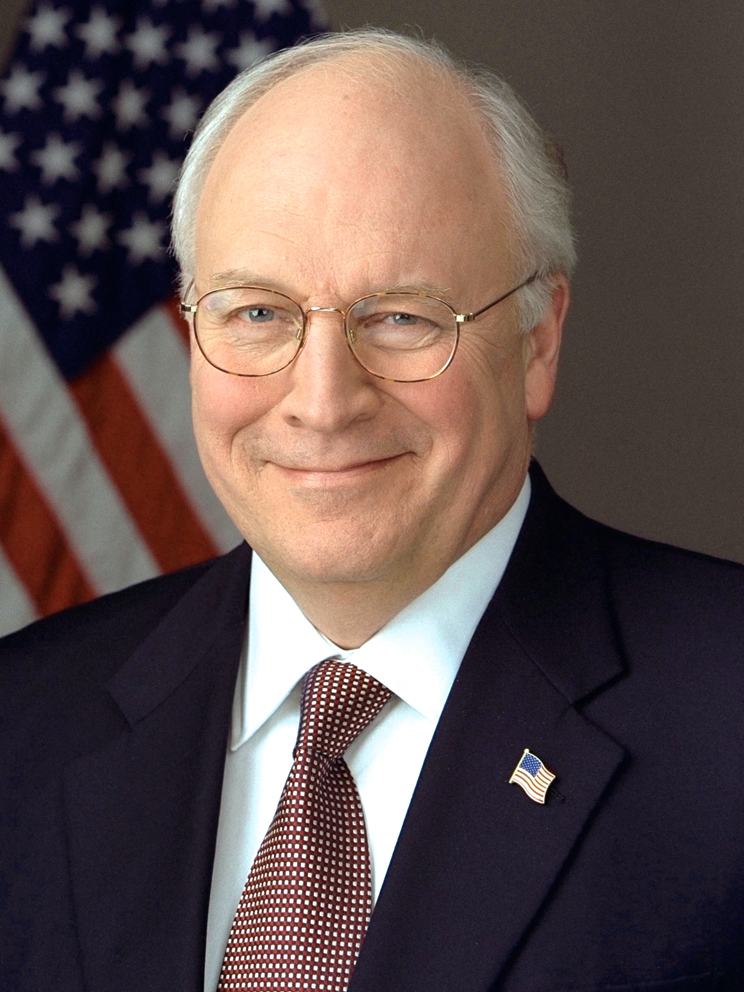
Uh! Wow. Now, I need to rethink this. Hmmm. Not sure I know what to do with that smile. Don't try to get by just upon that!
Hey, Cheney is getting blogged like mad today. What the hell did he say?
“[W]e are at war and when President Obama pretends we aren’t, it makes us less safe.... Why doesn’t he want to admit we’re at war? It doesn’t fit with the view of the world he brought with him to the Oval Office. It doesn’t fit with what seems to be the goal of his presidency — social transformation — the restructuring of American society.”Obama wanted to smile at the whole world:

But it's hard to get by just upon a smile.
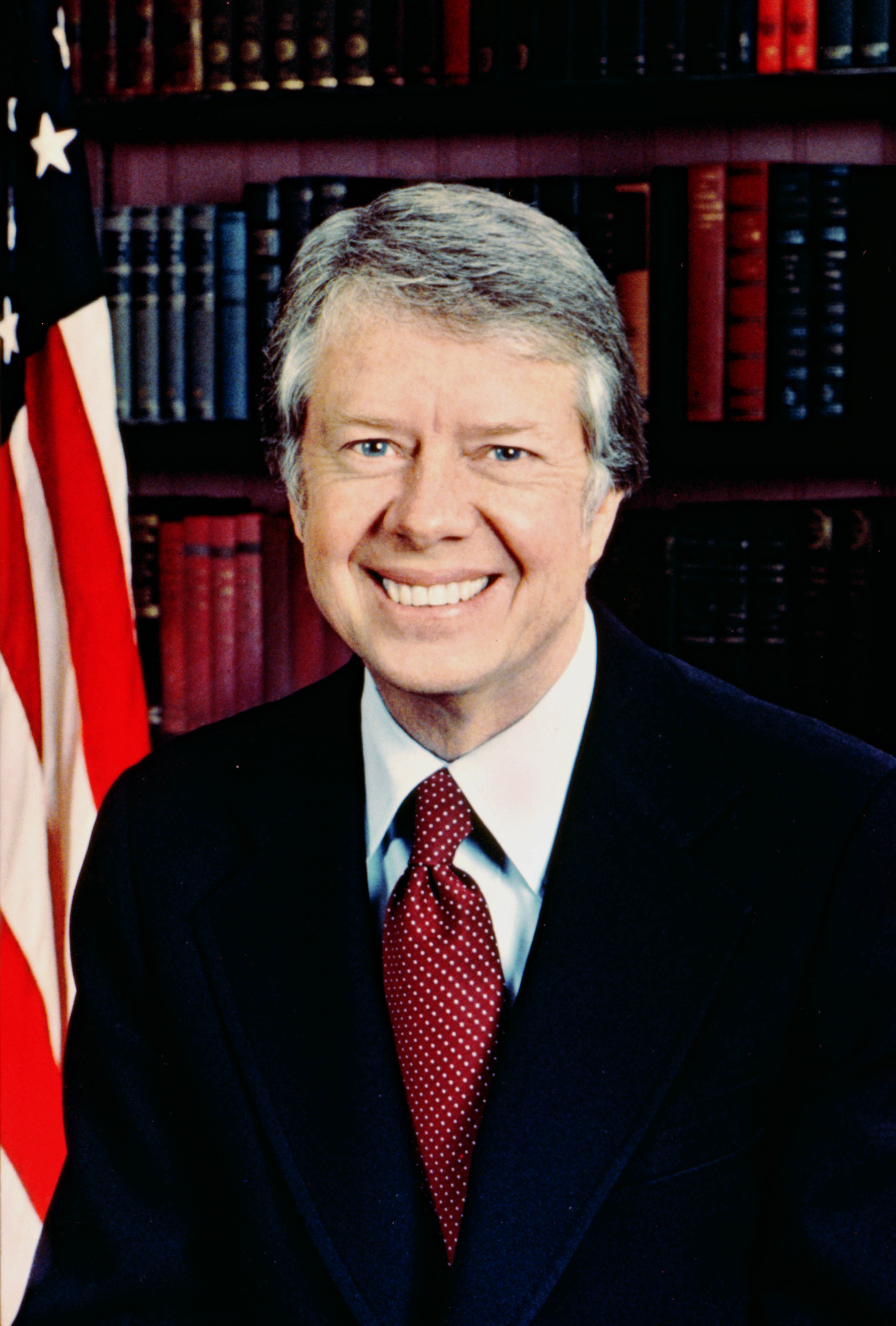
You can become President just upon a smile... and not much more. But then what do you have?
You're not the world's nice guy. It's not a cocktail party. It's real, and we're the United States.
"As I’ve watched the events of the last few days it is clear once again that President Obama is trying to pretend we are not at war. He seems to think if he has a low-key response to an attempt to blow up an airliner and kill hundreds of people, we won’t be at war. He seems to think if he gives terrorists the rights of Americans, lets them lawyer up and reads them their Miranda rights, we won’t be at war. He seems to think if we bring the mastermind of Sept. 11 to New York, give him a lawyer and trial in civilian court, we won’t be at war.
“He seems to think if he closes Guantanamo and releases the hard-core Al Qaeda-trained terrorists still there, we won’t be at war. He seems to think if he gets rid of the words, ‘war on terror,’ we won’t be at war. But we are at war and when President Obama pretends we aren’t, it makes us less safe. Why doesn’t he want to admit we’re at war? It doesn’t fit with the view of the world he brought with him to the Oval Office. It doesn’t fit with what seems to be the goal of his presidency — social transformation — the restructuring of American society. President Obama’s first object and his highest responsibility must be to defend us against an enemy that knows we are at war."

Back to Cat:
Subscribe to:
Posts (Atom)


