At first it was exciting that Obama was the sort of brainy, cultivated Democrat who would be at home in a “West Wing” episode.
But now he acts like he really thinks he’s on “West Wing,” gliding through an imaginary, amber-lit set where his righteous self-regard is bound to be rewarded by the end of the hour.
I've never watched "West Wing," and that reference doesn't make me regret my avoidance of it.
His arrogance led him to assume: If I build it, they will understand. He can’t get the gratitude he feels he deserves for his achievements if no one knows what he achieved and why those achievements are so vital.
People liked him. And we liked the idea of ourselves liking him. The mistake was for him ever to think that made us want the things on the Democrats' wish list.
We want the best people to govern us, but many voters are so turned off by Obama’s superior air that they’re rushing into the arms of disturbingly inferior pols.
No. We hate the policies, and we're voting for the people who will undo them. It doesn't matter if they aren't as sleek and pretty. We want out of the place where the glamorous hero led us.
What happened is that a guy she really had -- she was in love with -- dumped her and was mean to her. Didn't just dump her, but did it in a mean, mean way. And she had everything invested in this guy, and she hasn't been the same since this happened. If I didn't have the scruples I have, I'd give you every detail because I know every detail because I know the guy. I have heard the guy explain the story, and I got livid! I was livid when I heard the story being told. The guy told me how much fun it was! I said, "Gee whiz! I'm supposed to be the guy with no heart here! I'm the conservative! I'm supposed to be the guy that has no compassion!" (interruption) Oh, yeah, big time liberal. Oh, no question, absolutely. At any rate, it's just a sad thing out there.
He doesn't go on to do a riff about how she was in love with Obama or some comic thing. It ends very quickly.
Drudge is — I think — implicitly asking with this alignment of photographs:
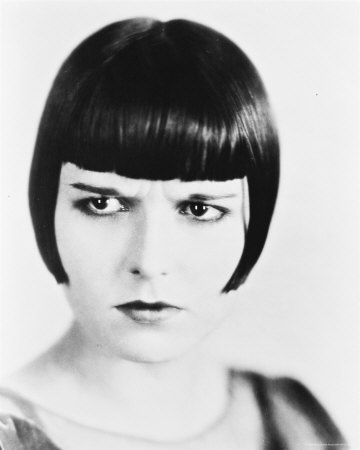
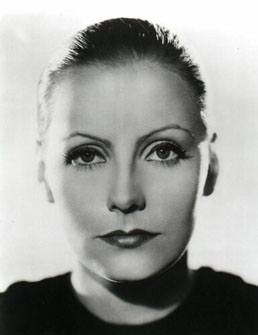
What drives intelligent women to that hairstyle? Are they thinking something like I don't want those feathery bangs...
... or the classic Louise Brooks straight-across look...
... but I can't have my forehead just out there to be gazed at!
What's wrong with foreheads? Is it that the forehead symbolizes the mind, and a woman can't have you looking straight at that? The intelligence must be filtered. There must be a buffer zone of femininity, so there must be some hair veiling the forehead — the theory seems to be. But why the bumper look that we see in the Drudge trio of Angela Merkel, Condoleezza Rice, and Maureen Dowd?
Obama’s bloodless rationality has helped spawn the right’s bloodletting of irrationality.
Now, there's an assertion! I agree that the blood is on the right, but I'm not seeing much rationality from anyone.
[Obama] has never shaken off that slight patronizing attitude toward the working-class voters he is losing now, the ones he dubbed “bitter” during his campaign....
The insane have achieved political respectability while the sane act too good for it all. The irrational celebrate while the rational act bored and above-it-all.
Oh, my. This is all so Dowdesque. She gets multiple themes going, many mixed images, and she demands that you believe that she's tied them all together when she says she has. It's ironic here, because she's the one full of passionate intensity and low on rationality. What I just can't buy is that Obama is rational. He's phlegmatic. He always was. You can read that as rational, but it's irrational to do so.
***
I was just reading an old post of mine from April 2007 — "Is Obama a gasbag?":
[I]f I didn't know who he was and that there was a crowd there, I would picture an old man slumped in an armchair, expatiating for the benefit of anyone unlucky enough to be within earshot. It's formless stream of consciousness. Oh, there is that theme of hope. The stream swirls back there at predictable intervals....
[R]eally, such drivel. Just listing a lot of issues and saying hope, hope, hope should not inspire real hope. I can't believe people are hearing this and thinking: brilliant rhetoric. "Intellectual slovenliness" is a much more apt phrase.
Yes, I know, I ultimately voted for him. Here's a post of mine from February 2008 explaining how I got from "gasbag" to the decision to vote for him in the Wisconsin primary. I can't really say that I was terribly rational.
The president is everywhere, trying to get more aggressive and recapture some of his “Yes we can” mojo in an effort to fend off the rebuke that’s barreling toward him from voters this fall.
Here's Dowd's column. You can search the radio show's transcripts here. It was a joke:
"If it was laudatory to call Bill Clinton America's first black president, why can't we call Imam Obama America's first Muslim president?"
To be fair, Dowd's use of "mocks" could be said to acknowledge it as a joke. But come on. She says:
Many people still have a confused view of Muslims, and the president seems unable to help navigate the country through its Islamophobia. It is a prejudice stoked by Rush Limbaugh....
If you're going to worry that comments plant the wrong ideas in people's heads, you should be more careful about the ideas you plant. Dowd took a Limbaugh phrase out of context. (Hey! Remember last month, when we were hyper-sensitive about the problem of taking quotes out of context?) In context, it was, first, a question, and second, always only a comparison to the famous Toni Morrison characterization of Bill Clinton as the first black president:
Years ago, in the middle of the Whitewater investigation, one heard the first murmurs: white skin notwithstanding, this is our first black President. Blacker than any actual black person who could ever be elected in our children’s lifetime. After all, Clinton displays almost every trope of blackness: single-parent household, born poor, working-class, saxophone-playing, McDonald's-and-junk-food-loving boy from Arkansas.
"Trope" — I love that. AKA stereotype.
And when virtually all the African-American Clinton appointees began, one by one, to disappear, when the President's body, his privacy, his unpoliced sexuality became the focus of the persecution, when he was metaphorically seized and bodysearched, who could gainsay these black men who knew whereof they spoke?
The message was clear "No matter how smart you are, how hard you work, how much coin you earn for us, we will put you in your place or put you out of the place you have somehow, albeit with our permission, achieved. You will be fired from your job, sent away in disgrace, and--who knows?--maybe sentenced and jailed to boot. In short, unless you do as we say (i.e., assimilate at once), your expletives belong to us."
(Shouldn't that be "all your expletives are belong to us"?)
Now, we all know that Bill Clinton is not actually black, so to say Obama is the first Muslim president in the way that Bill Clinton is the first black president actually implies that Obama is not a Muslim. As in: Christian faith notwithstanding, this is our first Muslim President. More Muslim than any actual Muslim person who could ever be elected in our children’s lifetime.
In context, please!
And answer the question: If it was laudatory to call Bill Clinton America's first black president, why doesn't the phrase "first Muslim president" work the same way?
There are some good answers to that question:
1. Back in 1998, when Morrison wrote her essay, Americans — or at least the Americans she was writing for — really did think it would be a fine thing to have a black president, but today, when Rush Limbaugh said that, Americans have a big problem with the idea of a Muslim president and Rush knows that.
2. Since we know Bill Clinton isn't black, calling him black creates no confusion. Calling Obama a Muslim, even as a trope, plays with — stokes — the doubts people have.
Bottom line: Am I criticizing Dowd? Only a little. She's stoking the misunderstandings of Rush Limbaugh that she knows NYT readers have. She doesn't care about giving him his due. But that's okay. He feeds on the things like this. I'm sure he'll have his fun on tomorrow's show. And it will give him license to spend a few more minutes massaging Obama-Muslim, Obama-Muslim, Obama-Muslim... into the listeners' confused mushy heads.
On Monday, Rush was riffing on that Maureen Dowd column about The Sherrod Incident, which had this quote from Congressman John Lewis about Shirley Sherrod and her husband Charles:
“I’ve known these two individuals — the husband for more than 50 years and the wife for at least 35, 40 — and there’s not a racist hair on their heads or anyplace else on their bodies”....
Rush stresses the image:
... the media is holding Charles Sherrod up as a paragon of virtue. And John Lewis said that there's not a hair of racism on his head or anywhere else on his body. It's the first time I've ever heard anybody say that. There['s] not a shred of racism any hair on his head, or the rest of the body. What's Lewis thinking when he says that?
He pauses to let us try to picture all the body hair Lewis has strangely conjured up for us to contemplate the possible racism of.
I can't explain everything about The Sherrod Incident, but I can explain Lewis's linguistic mishap. He began by mixing up 2 common idiomatic expressions: 1. not a [blank] bone in his body, and 2. wouldn't harm a hair on his/her head.
Having said "not a racist hair on their heads," Lewis must have realized that it didn't work the way it was supposed to. It didn't say there's absolutely nothing racist about them, because people have a lot more hair than just on their heads. By going with hair on their heads instead of bones, it's as if he were saying: in the part of them we can see, there's no racism. To avoid creating the implication that there was hidden racism, he had to vouch for the racism-free nature of the rest of their hair. So he tacked on "or anyplace else on their bodies."
The West Wing white guys who pushed to ditch Shirley Sherrod before Glenn Beck could pounce not only didn’t bother to Google, they weren’t familiar enough with civil rights history to recognize the name Sherrod. And they didn’t return the calls and e-mail of prominent blacks who tried to alert them that something was wrong....
The president appears completely comfortable in his own skin, but it seems he feels that he and Michelle are such a huge change for the nation to absorb that he can be overly cautious about pushing for other societal changes for blacks and gays.
(Gays! Where did that come from?)
His closest advisers — some of the same ones who urged him not to make the race speech after the Rev. Jeremiah Wright issue exploded — are so terrified that Fox and the Tea Party will paint Obama as doing more for blacks that they tiptoe around and do less. “Who knew that the first black president would make it even harder on black people?” asked a top black Democratic official....
“The president’s getting hurt real bad,” [Congressman James Clyburn of South Carolina,] told me. “He needs some black people around him.” He said Obama’s inner circle keeps “screwing up” on race: “Some people over there are not sensitive at all about race. They really feel that the extent to which he allows himself to talk about race would tend to pigeonhole him or cost him support, when a lot of people saw his election as a way to get the issue behind us. I don’t think people elected him to disengage on race. Just the opposite.”
Dowd ends by recommending that Obama hire Shirley Sherrod for a newly created position called "Director of Black Outreach."
Said Michelle Obama, as quoted by a friend, as quoted by Maureen Dowd, who is writing about how, when voting for Obama, we had the feeling that we were (finally) getting a President who's very normal. How does that work? Raised-by-wolfishness leads to (a semblance of) normality? Solitude fosters a deep longing to be with others and one overachieves in the appearance of normal department?
Maureen doesn't answer those questions. She merely murmurs "he seemed to have come through exceptionally well adjusted. " She quotes an Obama hagiographer's dubious quotation:
“His aides from the Senate, the presidential campaign, and the White House routinely described him with the same words: ‘psychologically healthy,’ ” writes Jonathan Alter in “The Promise”...
Isn't it funny that Alter put "psychologically healthy" in quotes when referring to the words of what appears to be a large crowd of individuals? If anything, that large crowd of individuals sounds a bit deranged, if they were really all mouthing the same mantra about their leader.
So it’s unnerving now to have yet another president elevating personal quirks into a management style.
We thought he was so normal that now we're unnerved — we're so unstable! — to find out that, like all those nutty other Presidents — Dowd cites Bush, Clinton, LBJ, and Nixon — Obama's got his quirks too.
Hey, Maureen, how about peering into the complexities of the appearance of normal? Whenever I hear the word "normal" used to gloss over things, I think of one of my favorite scenes in one of my favorite movies, Kubrick's "Lolita." It's the one where Peter Sellers, as Clare Quilty, is pretending to be a cop and inquiring into what Professor Humbert is doing at a hotel with that "pretty, tall, lovely little girl":
I said to myself when I saw you... there's a guy with the most normal-looking face I ever saw in my life... It's great to see a normal face, 'cause I'm a normal guy. Be great for two normal guys to get together and talk about world events, in a normal way....
What was the matter with your wife?... She had an accident! That's terrible! Fancy a normal guy's wife having an accident like that! What happened to her?... I get sort of carried away, being so normal and all....
I could easily have a word with George Swine. He's a really normal, nice sort of guy and I've only got to have a normal word in his ear and you'd be surprised what things could happen.... It's his job to fix you up with something nice. He gets paid for doing that and when he sees a guy like you, all normal... I think you're really normal.... Before you go, I was wondering whether maybe in the morning, you know... me being lonely and normal....
I'm sorry. The word "normal" has had extra texture to me since I saw that movie about 40 years ago.
But Dowd says "normal" and moves on. She describes the emergent quirkiness of the man whose normality supposedly impressed us so much we made him President. (Here's another Peter Sellers movie you need to see, by the way, if you want to fully experience the political chatter around Barack Obama.) Dowd, then:
How can a man who was a dazzling enough politician to become the first black president at age 47 suddenly become so obdurately self-destructive about politics?
President Obama’s bloodless quality about people and events, the emotional detachment that his aides said allowed him to see things more clearly, has instead obscured his vision.
Oh, but isn't it so much more likely that we were the ones whose vision was obscured? We need to take responsibility. In the end the story of Barack Obama will make perfect sense. It will all fit together. The lonely man — raised by wolves — swept up into our American psychosis.
“Even though I’m president of the United States, my power is not limitless,” Obama, who has forced himself to ingest a load of gulf crab cakes, shrimp and crawfish tails, whinged to Grand Isle, La., residents on Friday. “So I can’t dive down there and plug the hole. I can’t suck it up with a straw.”
We need to suck it up. We need to see what we've done. We've elected a man, and we need to cast aside our silly illusions and see what we've done. He's not the essence of magical "normal." He's a particular man with skills and limitations, and he is our President for the next few years. Now, shape up, see clearly, and deal with it.
Was it his ability? Or were we the ones that had the ability — the ability to see him as able when he was up there on the campaign platform mouthing abstractions? He's still up there — on what Maureen Dowd calls "a balcony" — but now all the concrete problems of the world are his responsibility. He hasn't changed. He hasn't stopped doing something he was able to do before. But we have reached the end of our capacity to idealize him. We don't like him up there, looking down, where things are going so wrong. We are withholding our trust. But rightly so! This ability to trust is not a very impressive ability. Let's be critical. Being critical, we have no reason to talk about whether the President is adequately soothing us.
That's her first (and only) mention of Camus in her column (which also has "Camus" in the title, "Camus Fired Up"). It's anyone's guess what Camus— presumably the existentialist Albert Camus — and comas have to do with entering lions' dens, except to say that the lion would have an easy time with a comatose intruder. (The lion's den in question is that Republican retreat Obama favored with this presence. )
I'm thinking Camus was dredged up for the sake of alliteration. (Dowd downfall?) First the coma, then the Camus. Note that Frank Rich's NYT column today is "The State of the Union Is Comatose." That coma is contagious.
Now, Albert Camus has appeared in Maureen Dowd's column before, but not because he was a synonym for existentialism/ennui/whatever that begins with the letter C. In "Camus Comes to Crawford," she wrote about Camus because George Bush was reading "The Stranger."
It takes a while to adjust to the idea of W., who has created chaos trying to impose moral order on the globe, perusing Camus, who wrote about the eternal frustration of moral order in human affairs. What does W., the archenemy of absurdity as a view of life, kindle to in C., the apostle of absurdity as a view of life? What can W., the born-again monogamist, spark to in C., the amorous atheist? In some ways, Mr. Bush is supremely not a Camus man. Camus hated the blindness caused by ideology, and Mr. Bush wallows in it. Camus celebrated lucidity while the president keeps seeing only what he wants to see.
With that insight into what Camus means to Maureen, perhaps you are in a better position to delve into the significance of Camus to Obama's "coma." Perhaps not!
***
Back in 2006, Bush's reading of "The Stranger" inspired me to read it. My summary of the book:
An ordinary man receives the jolt: his mother has died. His response is ordinary but also extraordinary. He smokes, drinks coffee, and seeks new love, real sensation in his ordinary world. He seems numb and inexpressive, and he follows various characters who lead him into their more fully formed lives. Marie offers love and marriage. He follows without seeing the importance of it. Raymond draws him into jealousy and revenge, and he goes there too, and doesn't see a reason not to. Killing a man or not killing a man seem like equal chances on a coin flip, and, seeing life that way, he kills a man. On trial, his emptiness and his search for sensation, for some feeling of living, become the argument for the prosecution, the reason why he is guilty. Condemned, he thinks it through. He sees the significance of life, even a short life, even a hated life, and finally recognizes that he exists, which is enough, which is everything.
If a President of the United States were anything like that.... we'd be up against the wall in the lion's den.
Tiger may have been the greatest pro golfer but he was an amateur adulterer. His puffed-up ego led him to leave an electronic trail with a string of buffed and puffed babes. Like so many politicians before him, Tiger ignored the obvious rule: Never get involved with women who have 8-by-10 glossies.
But Tiger is a private citizen, and he faced potential criminal charges, either for himself or his wife. Dowd doesn't even mention the Constitution in connection with Woods — even as she's going for parallelism — but Woods had a constitutional right not to talk to the police, and I assume he was well advised by lawyers as he chose not to talk. He had a right to do what he thought was best for himself. The public may be interested in him, and he needs to worry about our loss of respect for him, which would hurt his lucrative career in product endorsement, but he doesn't owe us anything.
Rogers, on the other hand was working for the government, in a position of a public trust, and her refusal to account for herself was quite a different matter. The constitutional provision for executive privilege is not like the individual right against self-incrimination. It's a matter of separation of powers having to do with the ability of the executive branch to function independently. If it is invoked, it should not be Rogers protecting her own interests. It should be because it serves the public good for the executive branch to be free of interference from Congress. It may well be that there are legitimate reasons for maintaining secrecy about the details of planning and carrying out a big White House dinner party. There are some delicate, sensitive matters in party planning, no? One could imagine Congress picking apart such things for the devious purpose of distracting and weakening the President.
Dowd says:
Both Tiger and Desiree hid and stayed silent because they mistakenly thought they were protecting the Brand. But despite their marketing savvy, these two controlling players spiraled out of control.
That sounds clever and amusing, but only if you don't try to imagine what Woods and Rogers might be hiding and how, if they spoke, their words would be used to damage them further. Dowd assumes that the truth has or will come out: "Don’t stonewall. Admit your mistake before others piece together the embarrassing facts." That is: It's the cover-up, not the crime. It will hurt more if you don't come clean. But I think there are things about what happened the night Woods ran into the tree that will never come to light. And who knows what more there is to the gate-crashers story? It sounds pretty frivolous, and we are expected to get over it. A slight glitch that represents nothing else of any concern. But is it?
Wow. That's Maureen Dowd. (Obama's in trouble!) She's writing about the importance of reaching people on a "visceral" level, the way Sarah Palin does.
Dowd quotes a "spiritual therapist": "[Palin's] alive inside, and that radiates energy, and people who are not psychologically alive inside are fascinated by that."
Obama's admirers have loved his thoughtful thinkiness, his cerebreality. But that's getting old and cold.
Dither, dither, speech. Foreign trip, bow, reassure. Seminar, summit. Shoot a jump shot with the guys, throw out the first pitch in mom jeans. Compromise, concede, close the deal. Dither, dither, water down, news conference.....
Where is the animal fire inside the clammily cool Prez? Maureen wants to know. Was it ever really there?
The animating spirit that electrified his political movement has sputtered out.
The animating spirit...
Whose animating spirit provided the electricity back then? Did it come from him, or did we generate it from within as we looked at him and fell in love?
You know, I think what Obama seems to have become, he always was. Shake him all you want, Maureen, but you're like some Star Trek extra (in tights and a tunic) trying to coax heat out of the body of Mr. Spock. I'm afraid these earnest efforts are futile.
Why is she not ashamed to let us hear that? Because she somehow really thinks that what comes from her own brain does not come from her own brain. That's not just unfair — as her statement reveals she knows — it's crazy.
... a cocktail waitress in a militia bar in Wyoming... a cocktail waitress in a militia bar in Wyoming... a cocktail waitress in a militia bar in Wyoming....
Why a cocktail waitress in a militia bar in Wyoming....?
Of all the images Maureen Dowd could conjure up for her alternate self — the self who cares what nasty strangers say — why a cocktail waitress in a militia bar in Wyoming? It's got something to do with right-wing extremists, but I can't put my finger on what.
(I've quoted the first 2 sentences of what is a column about that model who sued the blogger who called her a skank. Dowd has nothing interesting to say on the subject of pseudonymity on the internet.)